

Unfolding
A design process to create a roadmap for a life that works.

I’ve used the concept of ‘unfolding’ in its Italian iteration in my work, and now as an approach for the next phase of life. I prefer the word spiegare, which means to open completely something and metaphorically to make clear, explain.
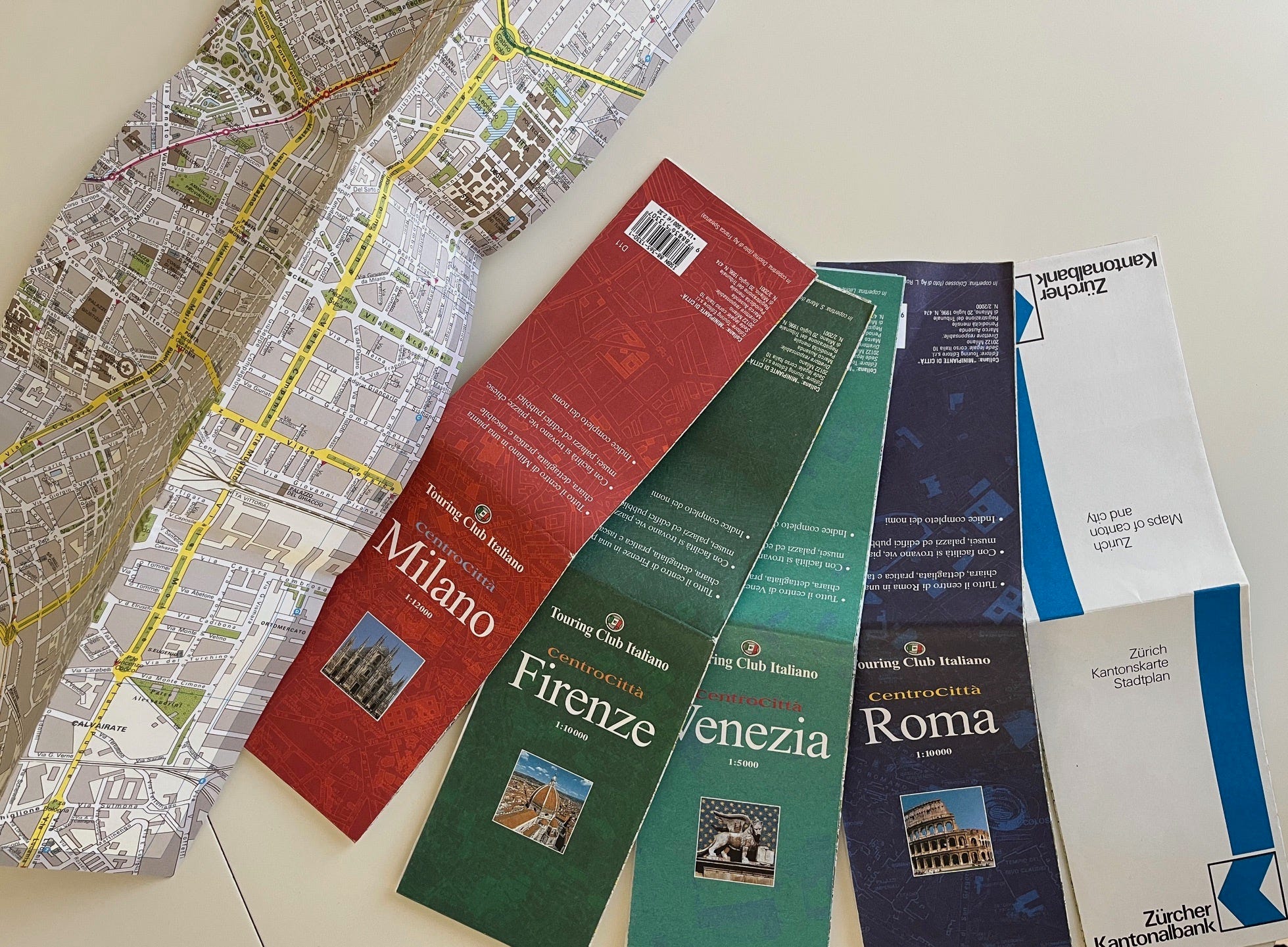
Imagine a map folded neatly into an accordion and the process of opening it up one fold at a time—from Latin explicare, composed by ex out and plicare or fold. Things become clearer as the folds open up in succession, until the entire picture is in front of you. This is a context.
I found the concept in Christopher Alexander’s1 writing twenty-six years ago when I joined the first startup. A Pattern Language and The Timeless Way of Building were held as guides for software building. In his second book, Alexander hints at the process:
“There is one timeless way of building. It is thousands of years old, and the same today as it has always been. The great traditional buildings of the past, the villages and tents and temples in which man feels at home, have always been made by people who were very close to the center of this way. It is not possible to make great buildings, or great towns, beautiful places, places where you feel yourself, places where you feel alive, except by following this way.”
This way is a quality that makes buildings alive, a quality connected to human need, to beauty, to interdependence, to nature. Within the way, is a method to feel the space around that works a bit like a context.
“Within this process, every individual act of building is a process in which space gets differentiated. It is not a process of addition, in which preformed parts are combined to create a whole, but a process of unfolding, like the evolution of an embryo, in which the whole precedes the parts, and actually gives birth to them, by splitting.”
The whole precedes the part and actually gives birth to them—an ode to beauty and humility that speaks to the soul rather than the mind. Alexander had been thinking about form and context at least since 1964, when he wrote in Notes on the Synthesis of Form that “a form is adapted to the context of human needs.”
Around the same time that I found these ideas, I also found two people who would become dear friends and colleagues—a human systems designer, and a psychologist. Together, we ideated a program we called, ‘Creating a Roadmap for a Life that Works.’
Over several Saturdays, the three of us met for hours to engage in an open dialogue about what the experience would look like. Rather than picking a curriculum and creating a timeline, we kept talking—it was energizing. Even all these years later I can still remember what it felt like to put our heads together like that.
The program flowed from that harmony and we offered it as a special event to a small local group within the larger ‘Company of Friends’ community.2 I cannot speak for others, but that weekend changed the trajectory of my understanding about noticing what feels like the best fit or approach in a given context.
With this week’s essay, I propose similar, life-enriching concepts.

1/5
But first, a round of links. Since the last round-up, On Value in Culture published:
The Lost Art of Letter Writing—Handwritten letters are a precious testimony of the human condition.
(🔒) An Education—A historical perspective on how American school was conceived, and why it kills the desire to learn.
Ground Zero—Hitting pay dirt. Introduction to The Art of the Interview: Conversation as a Tool to Make Sense of the World, Part 1.
(🔒) Life’s Joy—How to break out of the herd.
Brother Sun, Sister Moon—A poetic composition and song to celebrate all creatures great and small.
(🔒) Something Given—What one gives voluntarily to others, without demanding a price, reward, or return is a gesture that can restore humanity.
A Place to Call Home—How the space we inhabit defines us, which explains the hold an illusory game of non-existent spaces has on people.
(🔒) Hidden Variables—David Bohm on the human gift in the collective and how to actualize its potential.
With many thanks to those who recommend and share this work of love. A reminder that some lengthy essays are free to all email subscribers, but then are archived in The Vault (🔒) online.
2/5
It’s been drilled into us from an early age and the pressure has only increased as we’ve grown. The corporate world is filled with exercises that aim to communicate it. But we cannot trust what we want, and thus a ‘vision’ is precisely the wrong approach to finding what we need.
Henrik Karlsson says, “Everything that turned out well in my life followed the same design process,” and it’s a process of unfolding where you find the form inside the context. Just like I experienced that got me up to here, there’s more in the unfolding.
To find form, Henrik points out, the resolution of information of the context matters. Some useful guidelines:
“Can I increase the amount of information I get from the context?”
“My preconceptions are a filter that reduces the amount of information I get from the context. How can I filter less?”
“Can I increase the speed and precision with which I act on the context?”
A fun recent example of what my sister3 calls ‘aligning with intention,’ which is her version of finding the form in the context. In preparation for our trip to Umbria, we watched the RAI television series, ‘Don Matteo.’ A priest helps the Carabinieri in Gubbio solve mysteries. In the series, the Carabinieri Historical Calendar features prominently in the background.
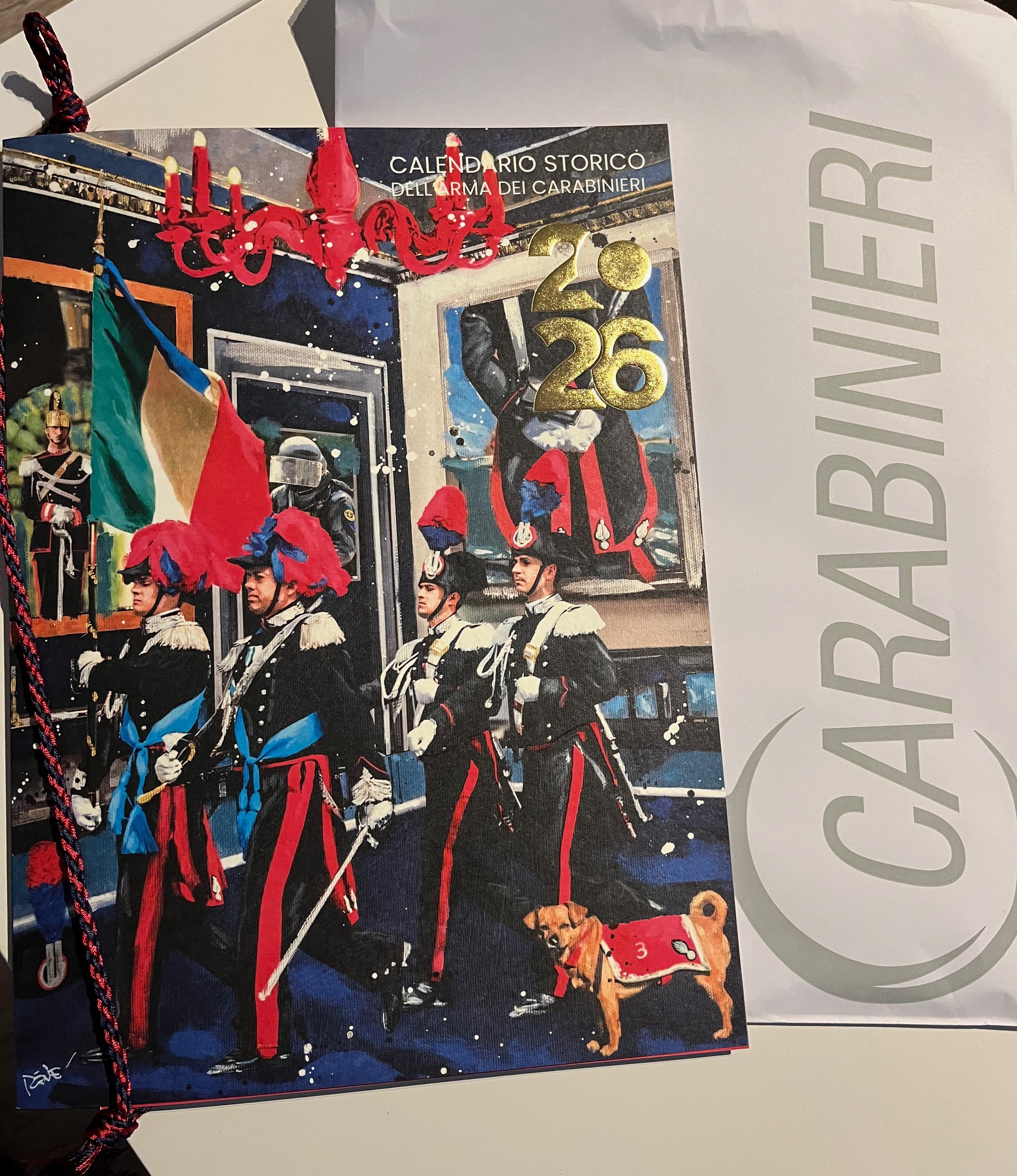
We’d seen the calendars on display in a local coffee shop on our trip to Tuscany the previous year. When we asked the proprietor where to obtain a copy, we learned they’re distributed in limited numbers.
After this past Christmas, we were in Bologna for proximity to our departing airport. We were walking under the porticoes toward a card shop we know and passed by the Carabinieri station just as two men were exiting. As we made to go in the door, the one asked what we needed— ‘the Calendar’ we said in unison.
It was our lucky day. One of the two turned out to be a Colonel in plain clothes who was holding a bag filled with calendars, after we told him our story to explain the interest, he gave us one. I could not believe our luck… however, our intention likely put us on the path. (When we got to it, the card shop was closed.)
“The context is smarter than you. It holds more nuance and information than you can fit in your head. Collaborate with it.”
Feedback from the context is critical to the process of unfolding. Something else my sister says that could be useful here, ‘one day at a time.’ It takes trust, as sometimes the steps are tiny and we get impatient.
3/5
Spiegare, to explain, means to open something folded in on itself: you can unfurl sails, beach towels, newspapers. But it is in its figurative sense that this word reveals its most pregnant meaning: that action is extended to the opening of knowledge.
It’s the first phase in the transmission of knowledge, in which it is unraveled and made manifest, clear, and accessible (understanding it is another matter entirely.)
The reference to the fold is not far-fetched or coincidental: the origami of a discipline must be explained step by step according to its successive involution; the cost of a crude explanation is a tear, or an even more convoluted crumpling. The complex is explained, the simple is found within: these two concepts also flow from that of the fold, and differ only in the number and complexity of their folds.
In his story ‘The Purloined Letter’ (1845),4 Poe says that the best way to avoid something being noticed is to camouflage it in clear evidence.
“Why, I will tell you,” replied the Prefect, as he gave a long, steady, and contemplative puff, and settled himself in his chair. “I will tell you in a few words; but, before I begin, let me caution you that this is an affair demanding the greatest secrecy, and that I should most probably lose the position I now hold, were it known that I confided it to any one.
“Proceed,” said I.
“Or not,” said Dupin.
“Well, then; I have received personal information, from a very high quarter, that a certain document of the last importance, has been purloined from the royal apartments. The individual who purloined it is known; this beyond a doubt; he was seen to take it. It is known, also, that it still remains in his possession.”
The fact that this word is absolutely everyday and common must not obscure its vibrant intensity from our eyes—an intensity that only physical words like this can possess. We explain with the hands, before the mouth. And that’s how meaning unfolds, in the physical world.
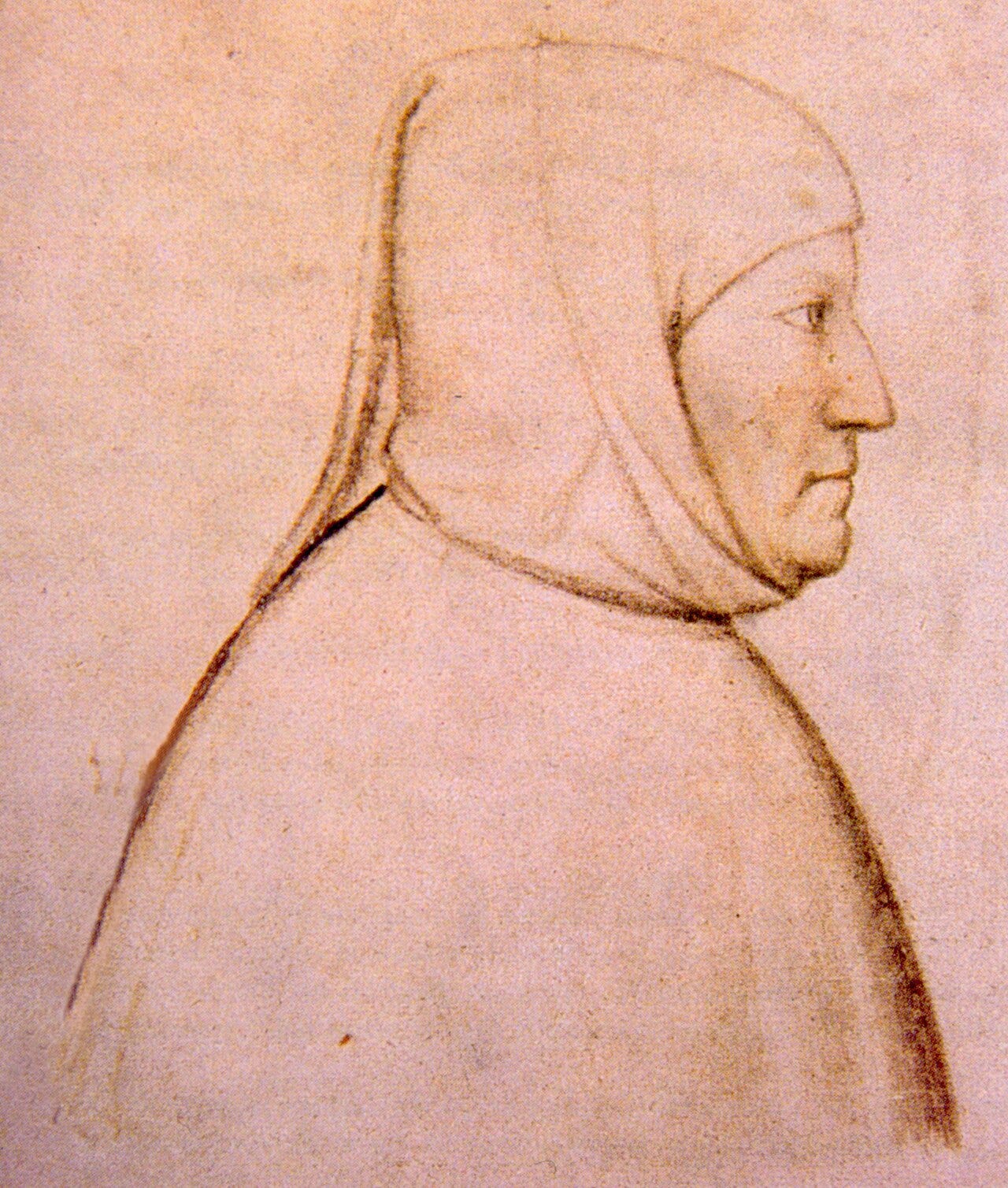
The curious epigraph (the quote) in the story—Nihil sapientiae odiosius acumine nimio (Nothing is more hateful to wisdom than excessive shrewdness)—which Poe attributes to Seneca, is from Petrarch’s treatise ‘De Remediis utriusque Fortunae’ (On the remedies of both fortunes.)
4/5
How does history unfold? For an explanation of this question, I’ve opened up a two-fold line of inquiry. One component (I’d like to get away from ends as they degenerate into opposites) could be our conception of time.
If time had a shape, what would it look like? What to a modern person is a line to an ancient Greek, whose horizon of meaning was nature, time’s representation was a recurring cycle, in consonance with the movement of celestial bodies. Hence why Greek and Roman Stoics talked about ‘Eternal Recurrence.’
The transition from cyclical to linear took place with the circulation of the Bible. Ecclesiastes proclaims: ‘What has been will be again … there is nothing new under the sun.’5 However, the book also contains a unique sequence of events, a history: ‘God creates the earth once, instructs Noah to ride out a unique flood in a singular ark, etc.’
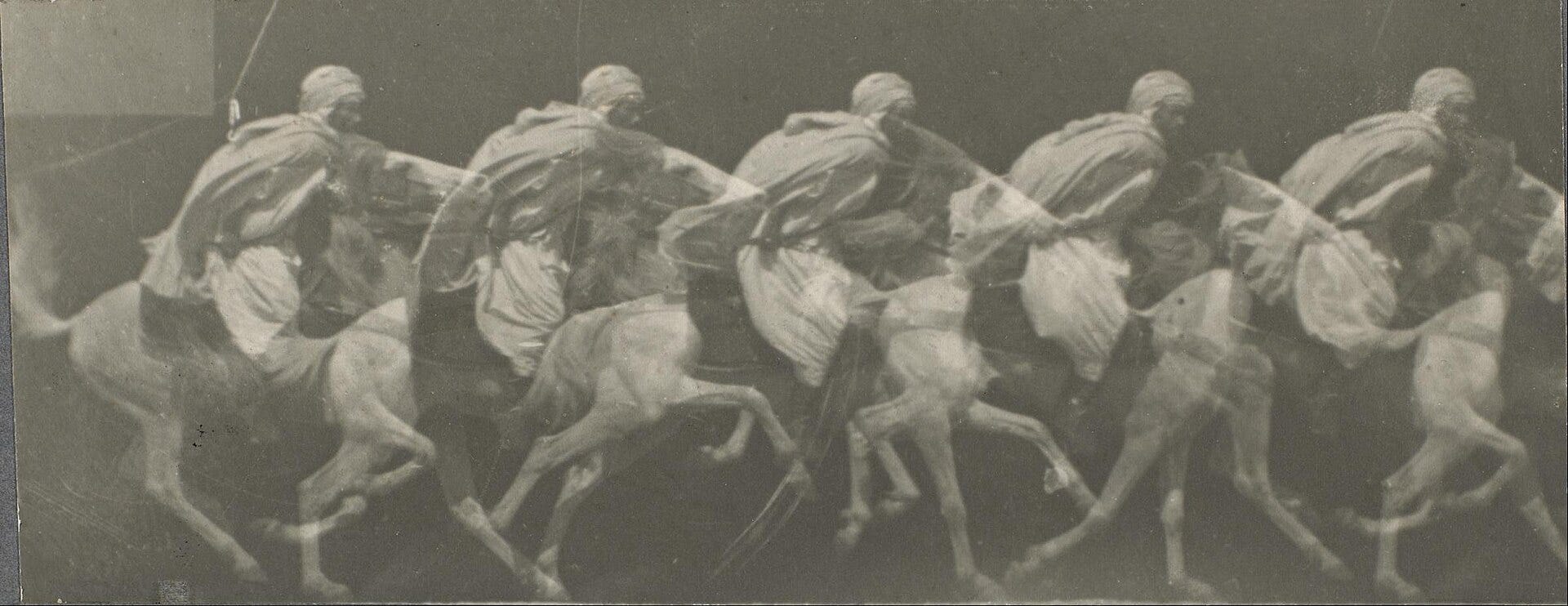

Four different changes led to our current metaphor of time: 1./ chronography, or the art of representing historical events; 2./ the direction Charles Darwin gave evolution; 3./ chronophotography, or the art of motion through successive images; 4./ and mathematics’ fourth dimension.6
So how we think about time is a component of our representation of history as a flow from the past to the future, and its events on that line. However, history is composed of things that happened big and small, the sum total of everyone’s affairs and actions. We have affinity with the humans who lived in the past, of which historian Alessandro Barbero’s lifetime work provides ample evidence.
“I realized that here is the key to our relationship with the people who lived in the past, in the sense that human beings on the one hand are always the same, with our defects, our weaknesses, our insecurities, our anxieties, our desires, our cravings, our impulses. And this is fundamental to pass the story on today, also to pass it on to school children.
At the same time, however, the beauty of history is that it makes you see human beings exactly like us, who however have built different societies, where there are other rules, in which behaviors, the things that can and cannot be done change, from one era to another, from one world to another.”
Hence, the second component I’ve rallied so far is the evidence of such recurrence in our behavior, though in different contexts (which do have weight.) The British Tudor War provides an example that might resonate—the series of deeds, issues, actions, and consequences had different actors and geographies, but seem to be driven by fairly universal impulses, which live in the nuance of being human.7
Which is what makes history cyclical, yet not the same in its context, the strongest of which is culture—it’s up to the people of the time to respond (rather than react) to facts, scenes, and concerns in ways that stir our common destiny into different paths, rather than one foregone conclusion.
5/5
There’s another meaning of unfolding that evokes a visualization of the whole, which often escapes us so steeped in the details of being human. And that is to open, spread: the wings, referring to birds, to stretch them out to fly, and by extension the flight, to take flight, to fly with outstretched wings.
Also in a figurative sense: “But my lord, like a sublime eagle, Spreads his flight behind the fledglings” (Parini8); “The peacock spreads its jeweled tail” (Poliziano9). Another figurative example: using the whole voice, in the sense of singing or reciting with the greatest possible sonority—sing a song at the top of one’s voice.
Like the opening of a map, this physical representation of the concept is perhaps the most valuable. We cannot fly like a bird, but we can sing for joy at the top of our lungs and should experience it more. (For several months I sang in a choir, until the pandemic hit.)
Luciano Pavarotti’s10 rendition of Giacomo Puccini’s aria from ‘Turandot’ is my favorite example of an exhortation in song—both physically, and metaphorically—Nessun Dorma.
One of the elements we included in our program was a handwritten letter each participant wrote to her/him-self to open a year down the road (the roadmap component), and read with a pencil to make notes in the margins as representations of the ‘folds’ in our whole being.
It seems simple, but it’s a difficult exercise, because our stories are not linear, neither are cyclical, but unfold based on the decisions we make—consciously or automatically (in that case, we also decide not to have agency.)
Fiction is in many ways an exorcism of the human condition—things unfold in a controlled manner, there’s a delay, a gap between the writer who knows what’s going to happen and the reader who doesn’t.
I read mostly mystery and crime fiction where the detective knows nothing and has to uncover what went down—that’s us with reality. In fiction, however, at the end of the story everyone knows the same things (less with literature, it takes some work there.)
They’re a valuable vehicle to observe how we’re mostly out of sync with our contextual unfolding—a moment before in the past (assumptions, experiences), or expectant of the future (mostly, the immediate these days.)
Love is the only method humans have found to overcome this being out-of-sync with oneself and others. When we’re in love, we’re ‘one’ with someone else, and this feeling slips as soon as a love story ends. Love is where the unfolding is simultaneous.
A reminder that supporters receive access to series, extra topic break-downs at The Vault and can view the full archives, including online-only updates to essays.
Christopher Alexander (1936-2022) was an Austrian-born British-American architect and design theorist. He was an emeritus professor at the University of California, Berkeley. His theories about the nature of human-centered design have affected fields beyond architecture, including urban design, software design, and sociology.
Another part that resonates with me, relevant to the second point/link in this collection:
“This is the importance of the void. A person who is free, and egoless, starts with a void, and lets the language generate the necessary forms, out of this void. He overcomes the need to hold onto an image, the need to control the design, and he is comfortable with the void, and confident that the laws of nature, formulated as patterns, acting in his mind, will together create all that is required.”
The most useful buildings are ones that are created by the maximization of agency of the people involved, with the utilization of language-based patterns that we inhabit to organize our behavior.
Ours was just one branch of a global phenomenon that emerged spontaneously from people who read and loved Fast Company magazine. In 2000, the editors and columnists created a space for people from all branches who could/wanted to join in over a weekend of dialogue with people featured in the magazine. I was able to go, along with my husband and meet the staff and the 100 people who answered the invitation from all over the world. My boss, an enlightened soul, even paid for the flight and the hotel room. Such luck is rare these days. In that gathering, I met a life-long partner-in-dialogue and friend whose work I’ve benefited from ever since. That was a physical experience of ‘value.’
In the last three-plus years, I’ve received love and understanding from many people in relation to my youngest sister’s death. Luckily, I have another sister with whom I’ve been sharing the emotional load and life lessons.
A short story by American author Edgar Allan Poe. It is the third of his three detective stories featuring the fictional C. Auguste Dupin, who is not a professional but wins because of his moral strength. The key factor behind Dupin’s successful resolution of the case is his anticipation. This is made possible by being able to understand and rely on the pattern of behavior of his subject—the Minister. Poe refers to it as ‘ simplicity,’ the “unitary characteristic of both mind and world” that aids Dupin’s predictions. Poe is trying to approximate human behavior to a scientific law by setting up a formula by which the several modes of human thought and action could be understood.
Source: Jay Gould, Time’s Arrow, Time’s Cycle (1987)
A discovery that opened the door to the possibility of time travel. I wrote two essays that explore human propensity for time travel:
Part 1 of time travel—Why we can’t see the past for what it was and imagine the future for what it could be.
Part 2 of time travel—Literary works clue us into influence and agency of the past; trends and predictions illustrate the difficulty to imagine the future.
Anton’s long essay ends with a foreboding statement: “If the effects of Henry VII on England’s economy were severe, the son whose succession he readily sacrificed it for, Henry VIII, were to be downright devastating.”
Giuseppe Parini (1729 – 1799) was an Italian satirist and Neoclassical poet born in Brianza, Lombardy to a poor family. His father was a petty silk trader and sent Giovanni to Milan under the care of his great-aunt. In Milan, he studied under the Barnabites in the Arcimboldi Academy, while earning a living by copying manuscripts. In 1741, his great-aunt left him a monthly payment, on condition that he enter the priesthood. Priesthood was not for him, and he worked in a lawyer's office during his free time.
Agnolo Ambrogini (1454 - 1494), known as Poliziano, after the Latin name of his birthplace, Mons Politianus, was an Italian poet, humanist, and classical philologist. Generally considered the greatest Italian poet of the 15th century, a member and fulcrum of the circle of intellectuals gathered around the ruler of Florence, Lorenzo the Magnificent, he authored works in Latin, Greek, and the vernacular.
Renowned Italian tenor Luciano Pavarotti (1935-2007) from my hometown of Modena sang the aria from the final act of Puccini’s opera ‘Turandot’ several times throughout his career, it was a favorite (so much so that it was played at his funeral). Two events made it famous all over the world: its use as a TV theme song for the 1990 soccer world cup, which made of Pavarotti a superstar, and the 1994 live Three Tenors concert in Los Angeles.