

Hidden Variables
David Bohm on the human gift in the collective and how to actualize its potential.

At a first blush, the title of this essay may not be attractive in the least—pass. It would be a shame, because I don’t intend to talk about physics, though that’s the fertile ground of a mind that understood the power of dialogue.
David Bohm1 was a brilliant physicist, and because of that he was one of the twentieth century’s most original thinkers. His work extended to the fields of philosophy, psychology, language, and education. An open mind.
I first read the collection of essays that originated from his talks two decades ago.2 And re-read it about every five years since. The edition prefaced by Mr. Peter Senge includes a first-person account of a dialogue with the physicist and his wife in 1989.
Both Senge’s remarks and Bohm’s words posses a lucidity and coherence we seem to have misplaced. Salience without echos, nor the need of likes to prop arguments. A refreshing respite from the everyday assault on reality.

A reminder that supporters receive access to series, extra topic break-downs at The Vault and can view the full archives, including online-only updates to essays.
According to Bohm, dialogue is not just a more productive way to have a conversation. Though having a conversation is a positive experience. Nor it is a mere technique to encourage reflectiveness, which he also supported. It isn’t just a method to improve organizational communications.3
From Latin dialogus, Greek dialogos (διάλογος) ‘conversation, dialogue,’ from dia ‘across, between’ and legein ‘to speak,’ dialogue is ‘a conversation between two or more persons.’ Literary examples include Plato’s 34 works, and Galileo’s Dialogue Concerning the Two Chief World Systems.4
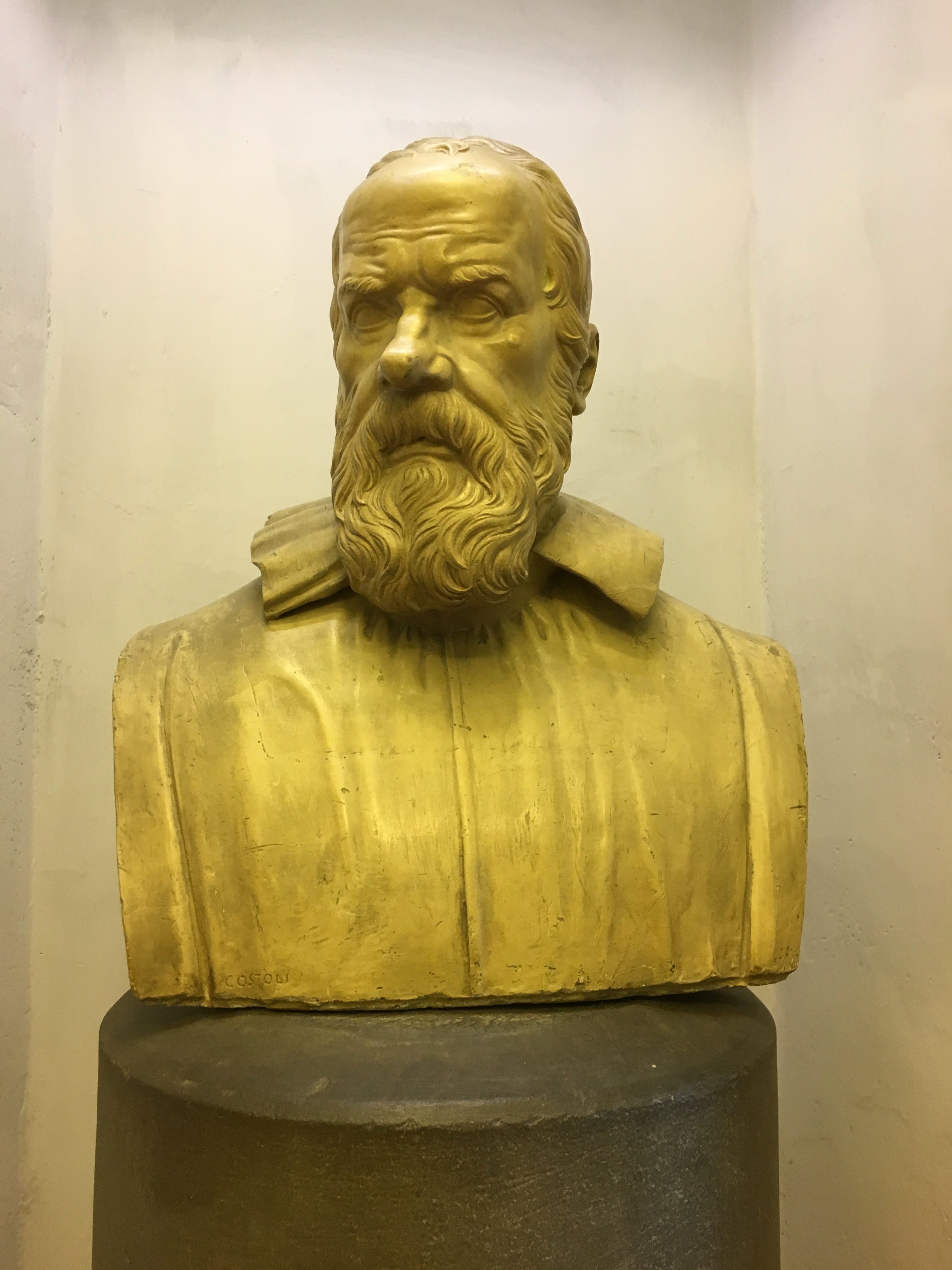
The physicist maintained that what holds society together is a coherent, ‘tacit ground.’
“Shared meaning is really the cement that holds society together, and you could say that the present society has very poor quality cement… The society at large has a very incoherent set of meanings. In fact, this set of ‘shared meanings’ is so incoherent that it is hard to say they have any meaning at all.”
‘Incoherent’ to a physicist is the light bulb that stands in contrast to the coherence in the extraordinary energy of the light generated by a laser. Applied to a social world, it could signal that the source of incoherence is the tendency to judge and defend embedded in the human self-defense mechanism. The incoherence increases with the fixed nature of past meaning, which turns into dogma.
When this happens to societies, he said, “societies become governed by shadows, hollowed out myths from the past applied as inviolate truths for the present.” This mechanism leads to incoherence at scale, separating people from each other and from reality. Unchecked incoherence becomes absurdity.
A simple personal example to illustrate. In our teenage years, my sister and I shared a room. We were at different phases of ‘messy.’ And we both had this funny way of addressing when something was out-of-order or messy: “someone did, etc.” Until one day we came to and realized that it was one of us who did the doing—and we laughed at the absurdity of trying to make it ‘someone.’ After that initial awareness, we both became more organized.
Two people or a smaller group can see things like this. It’s much harder to spot in broader culture that businesses cannot grow forever, things cannot accelerate exponentially,5 etc. before something or someone breaks. The latter is most painful, if ever, to fix.
We don’t know how to live together
Bohm spotted the phenomenon that has gained more prominence and relevance in the last fifteen to twenty years: that we don’t know how to live together in a changing world. And yet change is only accelerating.
Hence the (sometimes desperate) nostalgia for a past that never was, or that might have held in its context, but cannot work today. Bohm figured out that defending core beliefs and the resulting incoherence was becoming endemic.
Coherence in thought and action emerges when there’s a true flow of many views; it’s a way of living, not a fixed state. This is very hard to do for the many reasons Bohm outlined—assumptions, opinions, fragmentation, etc. He also decried what he came to see as intellectual fundamentalism in science, which has become embedded in culture.
Scientists should be the ultimate curious types, welcoming a variety of points of view and open to new ideas. Yet, “science has become the religion of the modern age. It plays the role that religion used to play on giving us truth.” That’s because dialogue has become divorced from the current scientific method.
Chilean biologist Humberto Maturana says, “when one human being tells another what is ‘real,’ what they’re actually doing is making a demand for obedience. They’re asserting that they have a privileged view of reality.”
The notion of truth
“Truth does not emerge from opinions, it must emerge from something else—perhaps from a freer movement of this tacit mind.”
“We have to get meanings coherent if we are to perceive truth, or to take part in truth.”
I dedicated an entire essay to the question of what is truth? The idea that ‘the’ truth exists vs. ‘a’ truth is particularly sticky in science, which has come to believe it can get truth, regardless of the evidence that anyone can never know everything there’s to know.
“Dialogue may not be concerned directly with truth—it may arrive at truth, but it is concerned with meaning. If the meaning is incoherent you will never arrive at truth. You may think, ‘My meaning is coherent and somebody else isn’t,’ but then we’ll never have meaning shared. You will have the ‘truth’ for yourself or for your own group, whatever consolation that is. But we will continue to have conflict.”
Bohm also addresses the cultural differences between Western focus on the individual and Eastern value of the collective in society—differences that influence the notion of truth.
The physicist understood that the problem with science was the inability to address wholes, the interdependence of context. Science can deal with isolated things, create new technologies from their application. But it cannot deal with multidimensional variables. So we have tech advances and social regression.
“the whole is too much. There is no way by which thought can hold the whole, because thought only abstracts; it limits and defines.”
And often enough it doesn’t even do that very well, I’d add.
Since thought limits and defines, it can only focus on the past, on what we know, have experienced and remember. At any one point, we have only a partial view of things. Without the ability to see the whole, thought misses the present.
Keep reading with a 7-day free trial
Subscribe to On Value in Culture to keep reading this post and get 7 days of free access to the full post archives.