

Two Modes of Thought
Our brain and cognition have two diverse and complementary cognitive functions—one devoted to truth, the other to meaning.

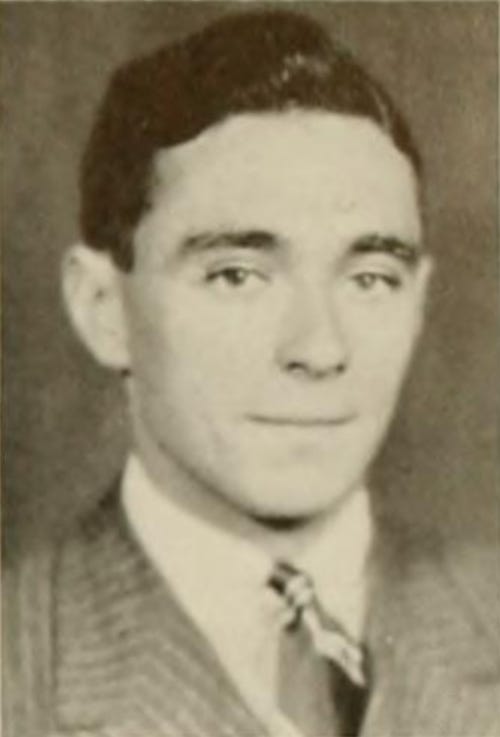
Jerome Bruner1 is among the small group of academics who most changed the way we think about learning and human development. He’s part of a generation who practiced after the war, when there was an acute need to transform thought.
The fundamentals of his work are the social origin of any mental process (including language), the influence of culture and experience on cognition, and the importance of interpreting the ways in which society and culture influence human development.
Bruner was born blind, which may have had an effect on his strong intuition that perception is not just controlled by senses but also by mind. He himself noted that, during the first two blind years, he had constructed a visual world in his mind.
Thus it makes sense that Bruner began his long career by first studying perception, stipulating its subjective and dynamic factors, then focusing on the development of thought in children and finally language.
A reminder that supporters receive access to series, extra topic break-downs at The Vault and can view the full archives, including online-only updates to essays.
At a moment in history when we’re programming machines to do cognitive work, it’s even more valuable to learn how humans process information. For Bruner, representation makes use of three systems: executive, iconic, and symbolic.
We acquire first the executive system, the hands-on, action-packed part of the playground, we learn through doing—e.g., a child learns to ride a bike. The iconic representation, in the first year of life is where our mind’s eye comes into play—e.g., a child can draw the route he must take to go to his aunt’s house.
Finally, the symbolic representation is the most abstract, this is where language takes center stage. When we read a book and imagine the scenes in our mind, that’s symbolic representation working its magic.
The three modes are best friends who love to hang out together, they cooperate throughout life. And in our development, we bounce between them, based on our learning needs.
How to peel an onion
Having said all that, there’s an important aspect of learning that we’ve overlooked: every time we revisit a topic, we go a little deeper and increase levels of complexity. Just like I’ve been doing for eighteen years on the blog, then the book, then these essays. Bruner in 1960:
“I was struck by the fact that successful efforts to teach highly structured bodies of knowledge like mathematics, physical sciences, and even the field of history often took the form of a metamorphic spiral in which at some simple level a set of ideas or operations were introduced in a rather intuitive way and, once mastered in that spirit, were then revisited and reconstructed in a more formal or operational way, then being connected with other knowledge, the mastery at this stage then being carried one step higher to a new level of formal or operational rigor and to a broader level of abstraction and comprehensiveness. The end state of this process was eventual mastery of the complexity and structure of a large body of knowledge…”
Bruner called this mechanism spiral curriculum. It’s like peeling an onion without the crying effect (unless one hates learning new things, of course.) In fact, our brain functions very much like the rest of our body.
Our muscles aren’t arranged in a straight line, but wrap around the bones. So exercises that take this into account work better—twisting motions along movement for major muscle groups is better for triceps, quads benefit from frontal, but also inside and outside motion, and so on (to keep it simple.)
The spiral curriculum helps build understanding over time, as we change, the information we revisit changes. I’ve read Herman Hesse’s Siddharta about once every decade, and each time I discover something new about my understanding.
We should learn mathematics with progressive levels of challenge in this method, revising the fundamentals and building concepts with increased complexity and applications on top of them—astronomy, physics, statistical analysis, and much more.
Bruner was a big fan of active learning—he believed that we learn best when we’re active explorers, rather than passive information consumers. I admit, this is still my forte, though in school it somewhat hampered my results, as I’ve always thought broader than the text.
It’s like being a detective: curiosity and problem-solving skills come into play—find and combine clues, test hypotheses, and have ‘eureka!’ moments. I once solved a very complex puzzle that was our geometry homework. Here, my visual abilities compounded logic and reasoning, besting both my mathematically-brainy sister and schoolmate. It was a glorious occasion.
But active learning by itself can feel overwhelming (I do know in first person), hence the value of structure—Bruner called it ‘scaffolding.’ That means a boundaries or guidelines, like training wheels on a bike, smaller chunks or steps for a complex topic, hints, and prompts.
These principles will come in handy when we’ll examine how scientists are training machines, a topic I’ll break down later in the spring. But we’re not done with Bruner, though these ideas and applications have changed the way we learn for the better.
In fact, in addition to traditional scientific thought, Bruner identified a ‘narrative thought’ through which people, by telling their own stories, give meaning to their life experience.
Dynamic duo
According to Bruner, human experiences that are not reworked through narrative thinking don’t produce functional knowledge that allows us to live meaningfully in the social and cultural context.
Keep reading with a 7-day free trial
Subscribe to On Value in Culture to keep reading this post and get 7 days of free access to the full post archives.