

Can Machines Think?
This disturbing question, posed by Alan Turing in 1950, has perhaps found its answer...

Today, it’s possible to chat with a computer as if it were a human. They say that new intelligent agents—like ChatGPT—are capable of performing tasks far beyond their creators’ initial intentions, and we still don’t know why.
‘They’ is scientists and investors who are pouring multiples of capital into a horizon that is the stuff of dreams—or nightmares, depending on worldviews. What else might emerge as we continue down this path?
While these machines were trained for some skills, others emerged spontaneously as they ‘read’ thousands of books and millions of web pages. Is this the secret of knowledge, and is it now in the hands of our creatures, ingesting all that’s been written?
Given how hype ferments in chaos, and wishful thinking is a corollary to big monetary bets, I maintain a skeptical stance. But I also see desire to learn, curiosity, and hope… mostly that the machines help us defy death.
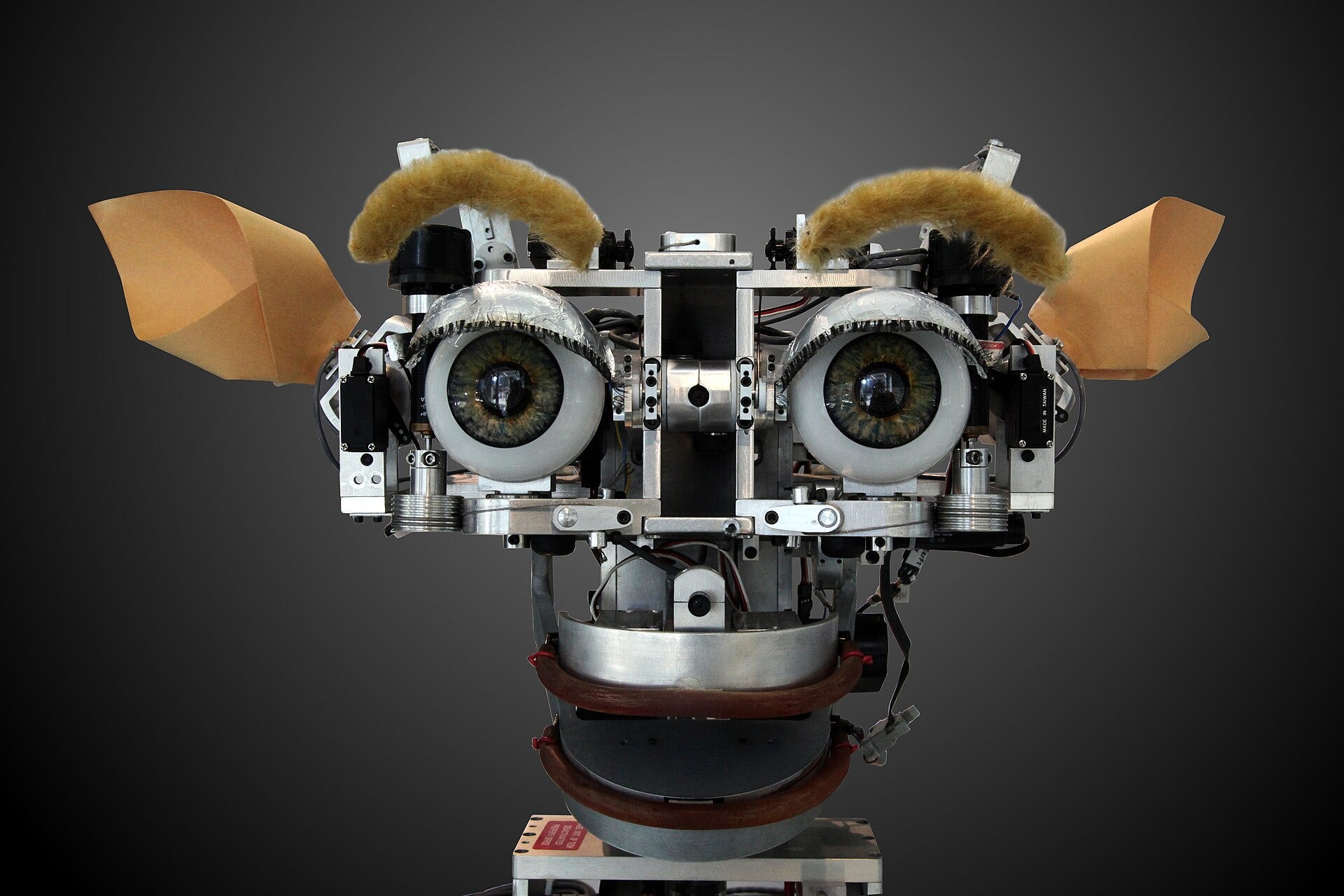
These are all human traits, and they influence culture. So I took time to try and tease apart some of the main issues with AI.
A reminder that supporters receive access to series, extra topic break-downs at The Vault and can view the full archives, including online-only updates to essays.
Machines sift through resumes, grant mortgages, select the news we read and now fight wars. Algorithms have entered our lives to do many of the things we wanted (and more we likely didn’t expect, nor especially want.)
Yet we can’t understand them or reason with them. That’s because their behavior is actually driven by statistical relationships derived from superhuman quantities of data within opaque systems whose outcomes not even their creators fully comprehend.
In some cases, these machines can be more powerful than us because they observe us constantly and make decisions on our behalf. Make no mistake, these are ‘alien’ agents, entities we don’t know much about.
Hence, before we address, “how can we incorporate them into our society without risks and side effects?” we should figure out and learn how we got here. And the first thing we should do is come up with a working definition of ‘intelligence’ that is as unbiased as we can manage.
Nello Cristianini is professor of Artificial Intelligence at the University of Bath.1 He co-authored several books on machine learning and bioinformatics. He’s written and teaches about how machines can become ‘intelligent’ without thinking like a human.
“The ability of an agent to operate effectively, pursuing a goal, in different contexts.”
According to Cristianini, it’s possible to create autonomous mechanisms that pursue goals adaptively—that learn, modify, and plan on their own. Thus his definition of intelligence as the next step: “knowing how to behave in front of something entirely new.”
Just as humans and animals (in general) are able to learn from their mistakes and find solutions to complex problems, artificial intelligence is able to gradually improve its skills and behave increasingly effectively in new situations.
In his research Cristianini has come to the conclusion that technology alone is not enough. We need a crucial step if we want to pursue a safe coexistence with this new form of intelligence—and that’s the contribution of natural and human sciences.
In the biological world, the goal is survival. In the machine world, humans try to provide the goal, but there’s no control over what the machine does because it uses a non-linear dynamic.
I found it useful to learn more about how algorithms function. There are shortcuts:
Where there’s no theory, there’s lots of data and there use of statistics—here it would be helpful to have a broader mathematical knowledge to get a better view of the mechanism. And we do know that most people have a hard time with statistics in particular.
The web is the natural environment for data—thus data is recycled through text and images.
Feedback is non existent—that is information that tells what the machine needs to do. How does anyone know when it’s done a good thing? Outside the implicit user behavior through corrections, that is.
For years, Google used clicks for YouTube, for example. But then the machine was recommending rubbish, because it only counted clicks (we do go in an out of garbage content.) So then, they began to use ‘time spent,’ with the corollary that this encouraged the production of long videos.
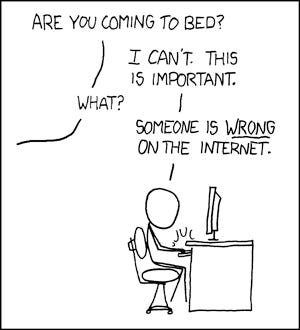
So we get what we encourage—shares on Facebook turned into negative stuff because people share what pisses them off. The famous, “someone is wrong on the Internet” in the old blogging days.
What we don’t (yet, ever?) understand is emergent behavior that is not maximization of metrics. Which for people is probably the Holy Grail of marketers the world over, for machines a still far objective.
In the absence of clear guidelines (and guardrails) and responsibilities, no one has any idea of what humanity is signing up for with AI. A key factor is auditability. How can anyone trust systems that cannot be audited? ‘Don’t be evil?’ indeed!
Trust is a big problem; the horizon to follow ‘no matter what’ is the dignity of human beings.
Superior intelligence
Keep reading with a 7-day free trial
Subscribe to On Value in Culture to keep reading this post and get 7 days of free access to the full post archives.